What is a Valve Insulation Jacket? A Critical Solution for Industrial Insulation

valve insulation jacket is a specialized insulation system used in industrial facilities to prevent heat loss, increase energy efficiency, and ensure personnel safety for valves, flanges, filters, pumps, and similar equipment. With rising energy costs and the growing adoption of sustainable production practices, the use of valve jackets is no longer a choice but a necessity.
Why Use Valve Insulation Jackets?

In industrial plants, valves and equipment often operate at high temperatures, leading to significant heat loss. The primary reasons for using a valve insulation jacket are:

  • Minimizing heat loss
  • Providing energy savings
  • Protecting employees from high temperatures
  • Preventing condensation and freezing issues
  • Improving system efficiency
  • Extending equipment lifespan

Naked valve surfaces continuously exchange heat with the environment, causing both energy loss and environmental heat radiation. Valve jackets significantly prevent these losses.

In steam lines, thermal oil systems, and processes involving high temperatures, valve surfaces cause serious heat loss. These losses not only increase energy costs but also reduce system performance. At this point, the valve insulation jacket steps in to provide maximum insulation.

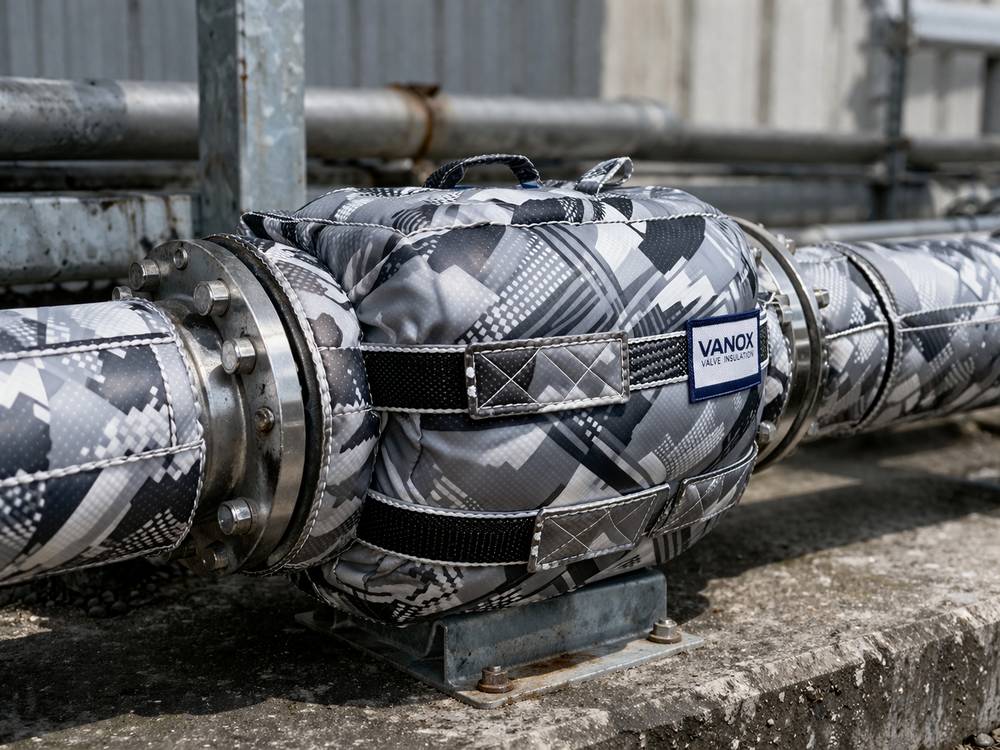
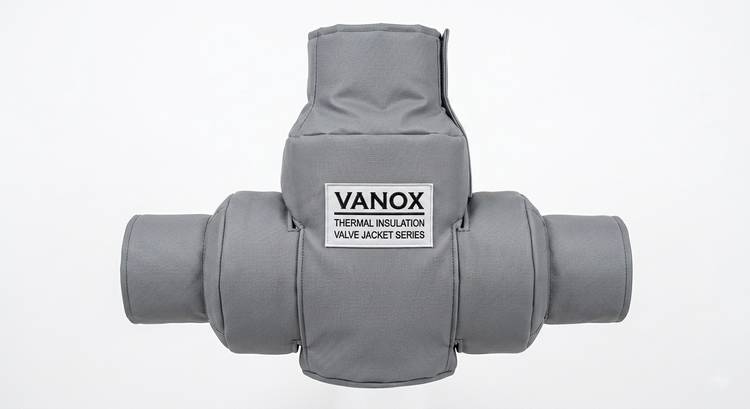
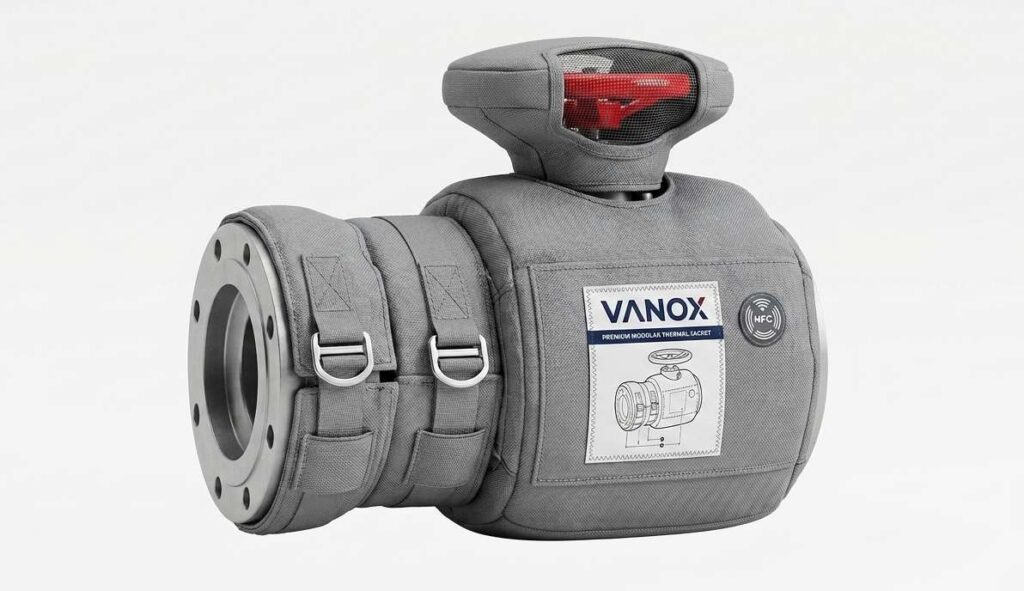
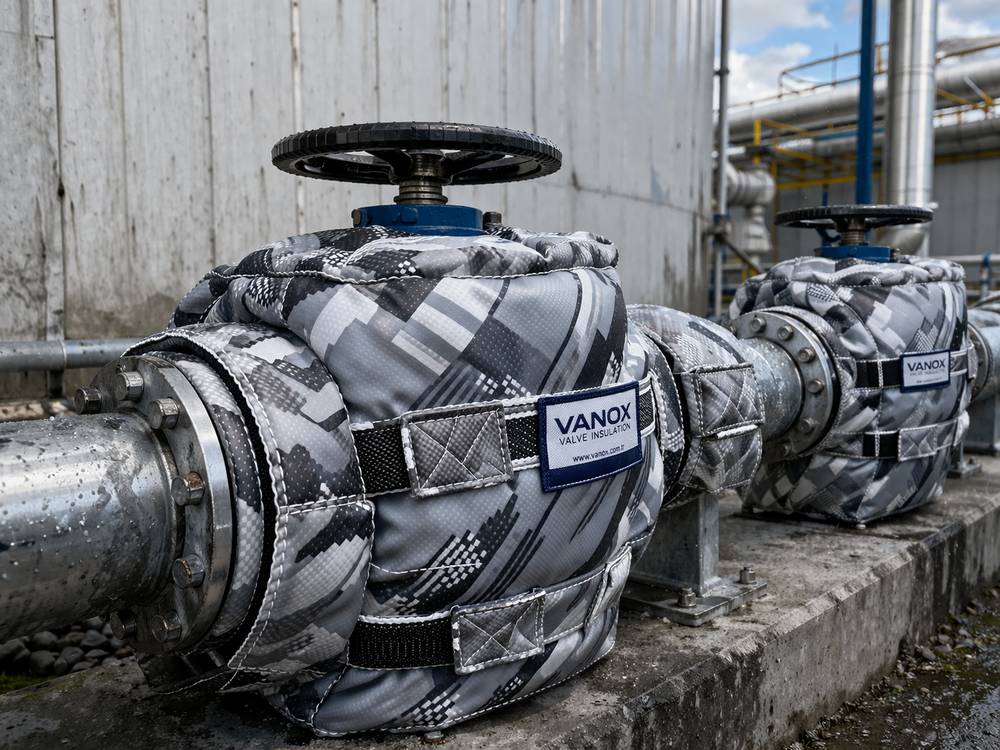
Valve jacket solutions manufactured by Vanox are high-performance, long-lasting products developed by analyzing competitor applications in the sector. As seen in the images, jackets specially designed for different valve types offer both an aesthetic and functional solution.

How Does a Valve Jacket Work?

valve jacket consists of a multi-layered structure that minimizes heat transfer. It features high-density insulation material on the inside and a durable, heat-resistant coating on the outer surface.

Heat transfer occurs in three ways: conduction, convection, and radiation. The valve jacket is designed to minimize all three mechanisms:

  • Conduction: Heat transfer is reduced thanks to the insulation filler
  • Convection: The sealed structure prevents air currents
  • Radiation: Heat reflection is achieved through the special coating

This ensures that the high temperature generated on the valve surface is transferred to the external environment at a minimum level.
Valve Jacket Types and Application Areas

Valve Jacket Types

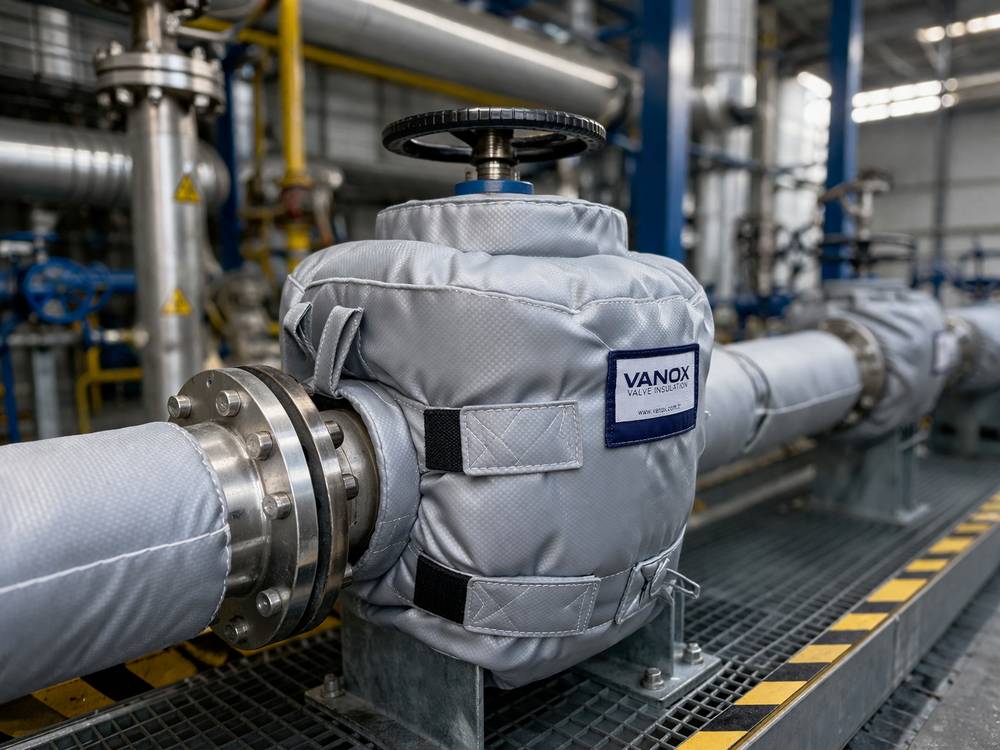
There are many types of valve jackets for different needs in industrial applications. Similar to the applications shown in the images, these products are customized according to the valve type.

Ball Valve Jacket

Specially manufactured for ball valve systems. Its compact structure ensures a perfect fit and provides maximum insulation.

Butterfly Valve Jacket

Used in large-diameter valve systems. Frequently preferred, especially in power plants.

Globe Valve Jacket

Used in control valves and produced with precise dimensions.

Filter and Equipment Jackets

Offers specialized insulation solutions not only for valves but also for filters and similar equipment.

Flange Jackets

Used to prevent heat loss at pipe connection points.

Custom Production Valve Jackets

Produced by taking on-site measurements for non-standard equipment. Provides maximum performance in complex geometries.


Valve Jacket Application Areas

The valve jacket has a wide range of uses and can be used in almost all industrial facilities:

  • Steam lines
  • Thermal oil systems
  • Chemical process lines
  • Food production facilities
  • Power plants
  • Petrochemical plants
  • Textile factories
  • Pharmaceutical production facilities

Valve systems used in these areas are generally exposed to high temperatures and pressures, so the use of valve jackets provides a great advantage.

Structure, Material, and Sizing

Valve Jacket Structure and Materials Used

Valve jacket systems are produced with a multi-layered structure to provide high-performance insulation. The materials used in Vanox production are in accordance with industrial standards and are highly durable.

Outer Layer

  • Silicone-coated fiberglass fabric
  • PTFE-coated surfaces
  • Aluminized coating fabrics

Insulation Core

  • Rock wool
  • Glass wool
  • Ceramic fiber (for high temperatures)

Inner Layer

The inner surface comes into direct contact with the valve and must be resistant to high temperatures.

Connection and Fixing Systems

  • Hook and loop (Velcro)
  • Hook and spring systems
  • Strap fastening

Valve Jacket Sizing and Custom Production

Vanox can produce by taking measurements in the field or through technical drawings. Sizing is based on valve type, DN diameter, flange details, and operating temperature.

Economic Advantages and Energy Efficiency

Economic Advantages of Using Valve Jackets

When correctly applied, it pays for itself in a short time. Fuel consumption decreases, energy costs fall, and carbon emissions are reduced.

Valve Jackets and Energy Efficiency

An uninsulated valve surface continuously radiates heat to the environment. With a valve jacket, heat loss is reduced by 70-80%, and the system operates more stably.

Valve Jackets and Occupational Safety

Hot valve surfaces pose a risk to employees. Valve jackets reduce the risk of burns and lower the contact temperature.

Installation, Pricing, and Vanox Quality

Advantages of Valve Jackets Over Competing Products

Being removable, providing easy access during maintenance, and reusability are its biggest advantages.

Vanox Valve Jacket Production Quality

Vanox stands out with its custom size production capability, fast production and delivery, and compliance with industrial standards.

Valve Jacket Installation and Maintenance

Installation is practical: the surface is cleaned, the jacket is placed, and fasteners are secured. It takes only a few minutes to remove and re-install during maintenance.

What Changes Valve Jacket Prices?

Valve diameter, material quality, temperature resistance, and quantity are the main factors determining the price.

Why Should You Use Valve Jackets?

Valve jackets are indispensable for modern industrial facilities. They provide energy savings and occupational safety. With Vanox quality, you can increase the efficiency of your business.

Frequently Asked Questions (FAQ)

Does a valve jacket really provide energy savings?

Yes, when correctly applied, a valve jacket can reduce heat losses from the valve surface by 60% to 80%. This provides significant energy savings, especially in steam and thermal oil systems. In large-scale facilities, a significant cost advantage is obtained on an annual basis, and it provides a quick return on investment in energy efficiency proejcts.

Can a valve jacket be applied to every valve type?

Yes, valve jackets can be applied to many different types of equipment such as ball valves, butterfly valves, globe valves, check valves, and filters. Additionally, custom size production can be made for non-standard equipment. This ensures a perfect fit with the valve and achieves maximum insulation performance.

How long does it take for a valve jacket to pay for itself?

Depending on the area of use, system temperature, and the number of valves, a valve jacket usually pays for itself within 3 to 12 months. This period can be much shorter, especially in systems operating at high temperatures. Thanks to the reduction in energy loss, the investment cost is quickly recovered.

Can a valve jacket be used outdoors?

Yes, thanks to special coating materials resistant to outdoor conditions, valve jackets can be used safely in open areas. They provide long-lasting performance thanks to outer surface coatings resistant to water, UV rays, oils, and chemicals.

Is valve jacket maintenance difficult?

No, thanks to its removable structure, the valve jacket can be easily removed during maintenance and re-installed after the process is completed. This feature shortens maintenance times, reduces labor costs, and increases operational efficiency.