
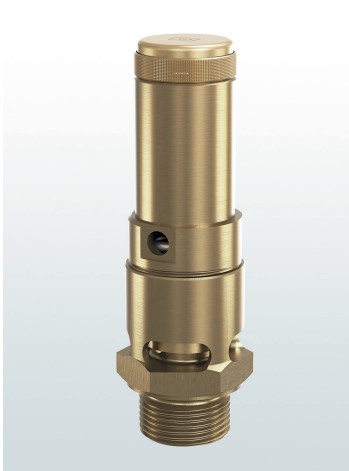
Goetze 810 Full Lift Atmospheric Discharge
Technical Specifications
| Code | Goetze 810 |
| Application | Air and Other Gases |
| Body Material | Brass |
| Connection | Threaded |
| Sealing | NBR, Viton, PTFE |
| PN (Pressure Rating) | 50 |
| Sizes (DN) | ¼” – 2″ |
| Set Pressure (Bar) | 0.2 – 50 |
| Temperature (°C) | -60 °C … +225 °C |
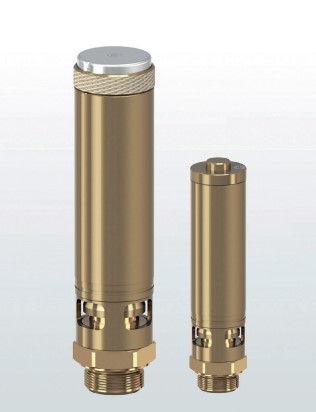
Goetze 812 Full Lift Atmospheric Discharge
Technical Specifications
| Code | Goetze 812 |
| Application | Air and Other Gases |
| Body Material | Brass |
| Connection | Threaded |
| Sealing | NBR, Viton, PTFE |
| PN (Pressure Rating) | 50 |
| Sizes (DN) | ½” – 2″ |
| Set Pressure (Bar) | 0.2 – 50 |
| Temperature (°C) | -60 °C … +225 °C |
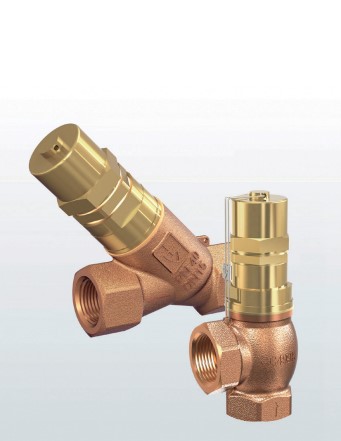
618 Bronze Safety Valve
Technical Specifications
| Code | 618 |
| Application | Steam, Liquid and Gas |
| Body Material | Bronze |
| Connection | Threaded |
| Sealing | PTFE, Viton, EPDM |
| PN (Pressure Rating) | 20 |
| Sizes (DN) | ⅜” – 2″ |
| Set Pressure (Bar) | 0.2 – 20 |
| Temperature (°C) | -60 °C … +225 °C |
| Options | Test Lever |
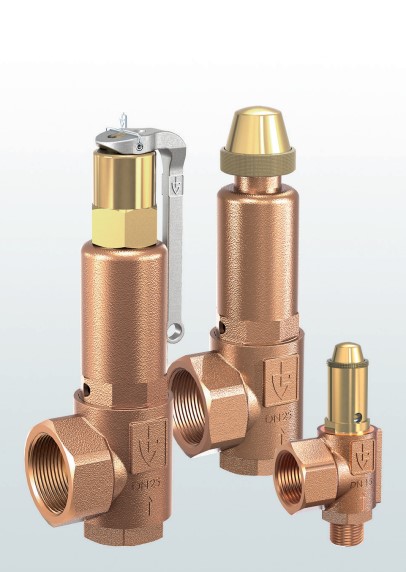
Goetze 851 Bronze Full Lift
Technical Specifications
| Code | Goetze 851 |
| Application | Steam, Liquid and Gas |
| Body Material | Bronze |
| Connection | Threaded |
| Sealing | PTFE, Viton, EPDM |
| PN (Pressure Rating) | 50 |
| Sizes (DN) | ½” – 2″ |
| Set Pressure (Bar) | 0.5 – 70 |
| Temperature (°C) | -60 °C … +400 °C |
| Options | Test Lever, Metal Bellows |
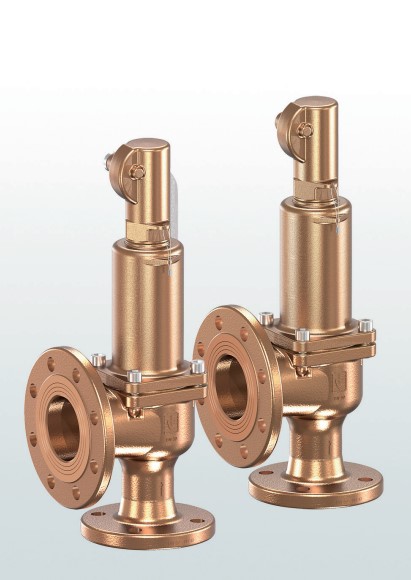
Goetze 852 Flanged Bronze Safety Valve
Technical Specifications
| Code | Goetze 852 |
| Application | Seawater, Steam, Liquid and Gas |
| Body Material | Bronze |
| Connection | Flanged |
| Sealing | Metal, PTFE, Soft Seal |
| PN (Pressure Rating) | 40 |
| Sizes (DN) | 40 – 50 |
| Set Pressure (Bar) | 0.5 – 25 |
| Temperature (°C) | -60 °C … +225 °C |
| Options | Test Lever, Metal Bellows, Soft Seal |
What Are Bronze Safety Valves? Applications and Key Features
Bronze safety valves are one of the most critical components used in pressurized systems to ensure safety and prevent damage. These valves are designed to release excess pressure from pipelines and systems, protecting equipment from failure, explosion, or operational hazards. They are widely used in industrial applications where pressure control is essential.
Products such as Goetze 810, Goetze 812, 618 bronze safety valve, Goetze 851, and Goetze 852 provide reliable performance across various pressure and temperature ranges. Full lift (full opening) designs allow rapid response to sudden pressure increases, ensuring system stability and protection.
One of the main advantages of bronze safety valves is their excellent resistance to corrosion. This makes them suitable for environments involving steam, gases, and even aggressive fluids such as seawater. For example, the Goetze 852 flanged bronze safety valve is widely used in marine and chemical industries, while the Goetze 851 model stands out for high-temperature applications.
These valves offer a wide operating range, typically from as low as 0.2 bar up to 70 bar, depending on the model. Temperature resistance ranges from -60°C up to +400°C, making them ideal for harsh industrial conditions.
Bronze safety valves are commonly used in power plants, petrochemical facilities, HVAC systems, and manufacturing industries. Choosing the correct valve is crucial for maintaining system safety, efficiency, and long-term performance.
Types of Bronze Safety Valves and Technical Specifications
Bronze safety valves are available in different models depending on system requirements and operating conditions. Among the most popular models are Goetze 810 and Goetze 812, which are widely used in air and gas systems due to their reliability and compact design.
The Goetze 810 model operates within a pressure range of 0.2 – 50 bar and offers multiple sealing options such as NBR, Viton, and PTFE. Similarly, the Goetze 812 provides comparable performance but supports a wider size range.
For more demanding applications, the 618 bronze safety valve is a strong choice. It is suitable for steam, liquid, and gas applications and includes durable sealing materials like PTFE and EPDM. It also offers a test lever option for manual operation.
In high-temperature environments, the Goetze 851 bronze safety valve is preferred. It can withstand temperatures up to +400°C and offers optional metal bellows for enhanced durability and performance.
The Goetze 852 flanged model is designed for larger systems requiring higher flow capacity. Its flanged connection ensures secure installation and leak-free operation, making it ideal for marine and industrial applications.
Overall, bronze safety valves provide durability, precision, and long service life, making them essential components in industrial safety systems.
How to Choose the Right Bronze Safety Valve and Its Advantages
Selecting the right bronze safety valve depends on several key factors, including operating pressure, temperature, and system requirements. For lower pressure systems, models like Goetze 810 are sufficient, while high-pressure and high-temperature applications require more robust solutions such as Goetze 851.
Connection type is another important factor. Threaded connections are suitable for smaller systems, whereas flanged connections, like those in Goetze 852, are ideal for large-scale industrial installations.
Bronze material offers significant advantages, including corrosion resistance, durability, and compatibility with a wide range of fluids. This makes bronze safety valves a preferred choice in industries such as marine, chemical processing, and energy production.
Another key benefit is low maintenance requirements. High-quality bronze safety valves are designed for long-term operation with minimal servicing, reducing downtime and operational costs.
In conclusion, bronze safety valves provide a reliable and efficient solution for pressure control. Choosing the correct model ensures safety, performance, and cost efficiency in any industrial system.
Frequently Asked Questions (FAQ)
1. What is a bronze safety valve?
A device used to release excess pressure in pressurized systems to ensure safety.
2. Where are bronze safety valves used?
They are used in steam, gas, and liquid systems across various industries.
3. What is the difference between Goetze 810 and 812?
They have similar functions but differ in size ranges and specific applications.
4. Which model is suitable for high temperature?
Goetze 851 can operate up to +400°C.
5. Should I choose threaded or flanged connection?
Threaded for small systems, flanged for large industrial systems.
6. Why choose bronze valves?
They offer high corrosion resistance and long service life.