
Industrial Damper Manufacturing for Ventilation and Gas Control Systems
Industrial damper systems are critical components used to regulate airflow and gas movement in ventilation networks, exhaust systems, and industrial process lines. Dampers control how air and gases move through ducts, pipelines, and chimneys, allowing engineers to maintain safe operating conditions and stable process performance.
In large industrial facilities such as power plants, cement factories, steel production plants, and chemical processing units, ventilation systems operate continuously. These systems must remove heat, gases, dust, and airborne particles from production environments while maintaining balanced air pressure throughout the facility.
Without properly engineered damper systems, ventilation networks may suffer from airflow imbalance, inefficient energy consumption, and unstable pressure conditions. For this reason, reliable industrial damper manufacturing plays a critical role in modern industrial engineering.
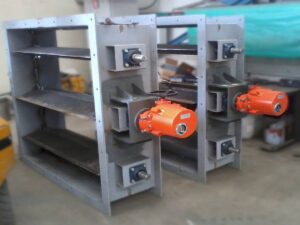
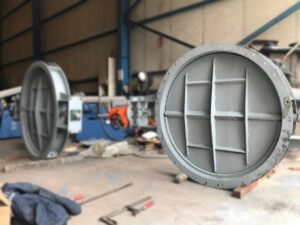
At Vanox, we design and manufacture industrial damper systems for a wide variety of industrial applications. Our engineering team develops custom damper solutions capable of operating under demanding conditions including high temperature, high pressure, and corrosive gas environments.
Industrial dampers allow engineers to precisely regulate airflow by opening, closing, or partially restricting ventilation ducts. This flexibility enables plant operators to control process conditions more effectively while improving system safety and operational efficiency.
In modern industrial ventilation systems, dampers are installed at key locations throughout the network. These locations may include main air supply ducts, exhaust channels, chimney systems, filtration units, and heat recovery equipment.
By strategically placing dampers within the ventilation network, engineers can control the distribution of airflow across different sections of the facility. This ensures that each production area receives the correct amount of ventilation required for safe and efficient operation.
Industrial damper systems are typically manufactured using high-strength materials such as carbon steel, stainless steel, or heat-resistant alloys. These materials allow dampers to withstand harsh industrial environments where extreme temperatures and continuous mechanical stress are common.
Vanox industrial dampers are designed with durability and reliability in mind. Each damper is manufactured according to detailed engineering specifications to ensure long service life and optimal airflow control performance.
Air Dampers and Airflow Control in Ventilation Systems
One of the most widely used components in ventilation systems is the air damper. Air dampers are designed to regulate the movement of air inside ventilation ducts and industrial air handling systems. By adjusting the position of the damper blade, operators can control the volume of air that flows through different sections of the ventilation network.
Airflow control is extremely important in large industrial plants. Production facilities generate heat, dust, gases, and airborne particles that must be removed continuously to maintain safe working conditions. Air dampers allow engineers to balance airflow throughout the system and ensure that each production area receives the correct level of ventilation.
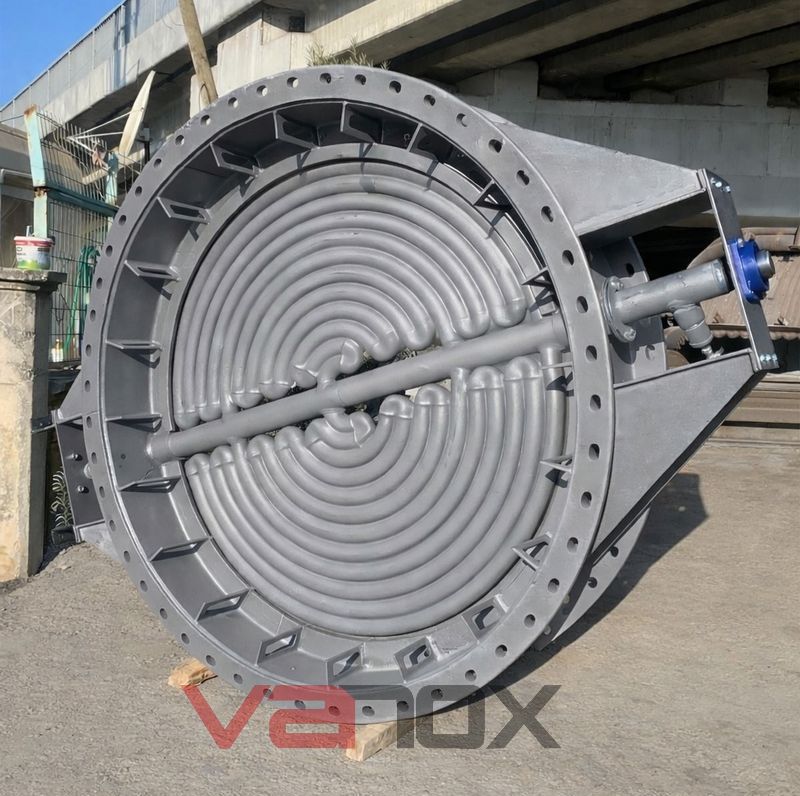
In complex ventilation networks, multiple air dampers are installed along the duct system. These dampers help distribute air evenly across different zones of the facility. Proper airflow balancing prevents pressure fluctuations and improves overall ventilation efficiency.
A properly designed ventilation damper also contributes to energy efficiency. When airflow is distributed correctly, ventilation fans and air handling units do not need to operate at maximum capacity. This reduces overall energy consumption while maintaining optimal air circulation.
In modern ventilation systems, dampers may be manually controlled or automated through integrated control systems. Automated airflow control allows ventilation systems to adapt dynamically to changing operational conditions within the facility.
HVAC Dampers in Heating and Cooling Systems
Another common application of damper technology is found in HVAC systems. An HVAC damper is used to regulate airflow in heating, ventilation, and air conditioning systems within commercial buildings, factories, and large facilities.
HVAC dampers help control the distribution of conditioned air across different areas of a building. By adjusting damper positions, facility managers can maintain balanced air pressure and stable indoor temperatures throughout the ventilation network.
In large buildings such as airports, hospitals, shopping centers, and industrial complexes, HVAC dampers play a critical role in maintaining comfortable indoor environments. Proper airflow regulation improves air quality while ensuring efficient operation of heating and cooling equipment.
Industrial HVAC systems often require specially engineered dampers capable of operating under heavy-duty conditions. These systems may involve high airflow volumes, elevated temperatures, or exposure to dust and industrial particles.
For this reason, high-quality industrial air damper manufacturing is essential for ensuring reliable long-term performance in ventilation and HVAC applications.
Fire Dampers and Fire Protection in Ventilation Systems
In modern buildings and industrial facilities, fire safety is a critical consideration in the design of ventilation systems. One of the most important safety components used in duct systems is the fire damper. Fire dampers are specifically designed to prevent the spread of flames and hot gases through ventilation ducts during a fire emergency.
Under normal operating conditions, a fire damper remains open and allows air to circulate freely through the duct system. However, when high temperatures or fire conditions are detected, the damper automatically closes. This closure helps contain the fire within a specific area of the building and prevents flames from spreading through the ventilation network.
Fire dampers are widely used in commercial buildings, hospitals, airports, industrial facilities, and large infrastructure projects. Because ventilation ducts often pass through fire-rated walls and floors, fire dampers act as a protective barrier that maintains the integrity of fire compartments.
Industrial fire damper manufacturing requires precise engineering and strict quality standards. These dampers must operate reliably during emergency conditions and maintain structural integrity under extreme heat. High-quality materials and robust mechanical components ensure that the damper closes properly when activated.
Smoke Dampers and Smoke Control Systems
In addition to fire dampers, ventilation systems may also include smoke dampers. Smoke dampers are designed to control the movement of smoke during a fire event. Instead of simply blocking airflow, smoke dampers help manage smoke extraction and maintain safe evacuation routes inside buildings.
Smoke control is an essential part of modern building safety strategies. During a fire, smoke can spread rapidly through ventilation ducts and corridors, creating dangerous conditions for occupants. Smoke dampers help limit this spread and guide smoke toward designated exhaust systems.
In many advanced ventilation systems, combined fire and smoke dampers are used. These systems provide both fire containment and smoke management capabilities. By integrating fire protection dampers with smoke control technology, engineers can significantly improve building safety.
Fire Dampers in HVAC Systems
Fire dampers are commonly integrated into HVAC duct systems. Because HVAC networks connect multiple areas of a building, they can unintentionally allow fire and smoke to travel between rooms or floors if no protective devices are installed.
By installing properly designed fire dampers within HVAC ducts, engineers can isolate fire zones and prevent the spread of flames through the ventilation network. This is particularly important in large buildings where complex HVAC systems connect multiple floors and departments.
High-performance HVAC fire dampers must comply with strict fire safety standards and building regulations. Industrial damper manufacturers design these components to withstand high temperatures while maintaining reliable closing mechanisms.
Reliable fire protection in ventilation systems not only protects property but also saves lives. For this reason, fire dampers remain one of the most important safety components in modern ventilation engineering.
Backdraft Dampers and Airflow Protection
In ventilation and industrial air handling systems, preventing reverse airflow is just as important as controlling the main airflow direction. This is where the backdraft damper becomes essential. A backdraft damper is designed to allow airflow in only one direction while preventing air from flowing backward through the duct system.
Backdraft dampers are widely used in HVAC systems, industrial ventilation lines, and exhaust air systems. When airflow moves in the correct direction, the damper blades open automatically. However, if airflow begins to reverse, the blades close immediately and prevent unwanted air movement.
Reverse airflow can cause serious operational problems in ventilation systems. It may allow contaminated air, smoke, or industrial gases to travel back into working environments. By installing a properly designed backdraft damper, ventilation engineers can maintain safe airflow direction throughout the system.
Industrial facilities often use heavy-duty backdraft dampers in exhaust systems, boiler plants, and large ventilation networks. These dampers protect equipment and help stabilize pressure levels inside the duct system.
Non Return Dampers in Ventilation Systems
Another commonly used airflow protection component is the non return damper. Non return dampers function similarly to backdraft dampers and ensure that airflow continues only in the intended direction.
Non return dampers are especially useful in systems where multiple ventilation branches are connected. Without these dampers, airflow from one branch may interfere with another branch and reduce the efficiency of the entire system.
By integrating backdraft dampers and non return dampers into ventilation networks, engineers can maintain stable airflow conditions while protecting the system from unwanted pressure fluctuations.
Industrial Damper Manufacturing
The manufacturing of industrial dampers requires advanced engineering knowledge, precise fabrication techniques, and high-quality materials. Because dampers are responsible for regulating airflow in demanding environments, they must be designed for durability and long-term reliability.
Industrial damper production involves multiple stages including engineering design, material selection, cutting, welding, and final assembly. Each damper must be manufactured according to the technical requirements of the ventilation system in which it will operate.
Industrial facilities such as power plants, steel factories, cement plants, and chemical processing plants require specially engineered industrial dampers. These systems often operate under extreme conditions such as high temperatures, high pressure levels, and exposure to dust or corrosive gases.
For this reason, damper manufacturers must carefully select materials that can withstand these conditions. Stainless steel, carbon steel, and heat-resistant alloys are commonly used in industrial damper manufacturing.
Quality control is also an essential part of the production process. Each damper must be tested to ensure proper blade movement, airtight sealing, and reliable operation under different airflow conditions.
High-performance industrial dampers improve system efficiency by ensuring accurate airflow control and minimizing pressure losses within ventilation networks.
Applications of Industrial Dampers
Dampers are used in a wide variety of industries and ventilation systems. Their primary function is to regulate airflow, control pressure levels, and improve the overall efficiency of air handling systems.
One of the most common applications of dampers is found in HVAC systems. In heating and cooling systems, HVAC dampers help distribute conditioned air evenly throughout buildings. This ensures comfortable indoor environments while improving the efficiency of air handling units.
Industrial ventilation systems also rely heavily on dampers. In factories and manufacturing plants, dampers control airflow through dust collection systems, exhaust ducts, and air filtration units. Proper airflow control helps maintain safe working conditions by removing airborne particles and industrial fumes.
Power plants and energy facilities use dampers in boiler systems and flue gas treatment systems. In these applications, dampers regulate airflow inside combustion chambers and flue gas ducts to maintain efficient combustion and emission control.
Large infrastructure projects such as airports, tunnels, and metro systems also depend on ventilation dampers to manage airflow and maintain air quality within enclosed environments.
Because of their versatility and reliability, industrial dampers remain one of the most important components in modern ventilation engineering.
Vanox Industrial Damper Solutions
Vanox specializes in the design and manufacturing of high-quality industrial dampers for a wide range of ventilation and HVAC applications. With extensive experience in industrial ventilation systems, Vanox provides reliable damper solutions tailored to the specific requirements of each project.
Our product range includes air dampers, fire dampers, backdraft dampers, and customized industrial ventilation dampers. Each product is manufactured using high-quality materials and advanced fabrication techniques to ensure long-term performance.
Vanox dampers are widely used in industrial plants, energy facilities, manufacturing factories, and large commercial buildings. By providing precise airflow control, our dampers help improve ventilation efficiency and system reliability.
Engineering flexibility is one of the key advantages of Vanox damper solutions. Each damper can be customized according to project specifications including size, material type, blade configuration, and actuator integration.
Through continuous innovation and engineering expertise, Vanox aims to deliver reliable airflow control solutions for modern ventilation systems around the world.